- Magnetic Therapy Devices Deals
- sku: 1550903556549753
- TOPONECHOICE JLC-112507
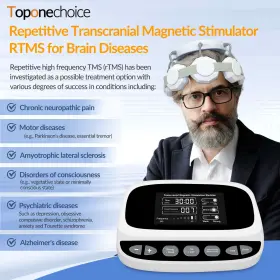
JLC-112507 TOPONECHOICE Transcranial Magnetic Stimulation
| Brand | TOPONECHOICE |
|---|---|
| Manufacturer Part Number | JLC-112507 |
| Main Purpose | BRAIN STROKE DEMENTIA, ALZHEIMERS DISEASE AD, PARKINSON, DISORDERS OF CONSCIOUSNESS, STROKE, MIGRAINE, AUTISM, CHRONIC NEUROPATHIC PAIN, MOTOR DISEASE, PSYCHIATRIC DISEASE, AMYOTROPHIC LATERAL SCLEROSIS |
| Variable Frequency Modes | 11 MODES TO CHOOSE |
| Magnetic Field Frequency | 1/5/10/15/20/30/40/50HZ, 8 FIXED FREQUENCY ADJUSTABLE |
| Color | WHITE BLACK |
| Working Voltage | AC 110V-240V, 50HZ/60HZ |
| Material | ABS |
| Time | 0-95 MINUTES, EVERY 5 MINUTES ADJUSTABLE |
| Head Vibration Mde | AVAILABLE |
| Weak Level Magnetic Strength | 6MT-10MT |
| Type | STIMULATION DEVICE |
| Department | MEN, UNISEX, WOMEN |
| Unit Type | UNIT |
| Number Of Therapeutic Heads | 1 LARGE THERAPEUTIC HEAD 8 SMALL THERAPEUTIC HEAD |
| Manufacturer Warranty | 1 YEAR |
| Body Area | HEAD |
| Features | ADJUSTABLE |
| Strong Level Magnetic Strength | 11MT-19MT |
| Net Weight | 1KG/2.21 LBS |
| Country Of Origin | CHINA |
Review TOPONECHOICE Transcranial Magnetic Stimulation For Traumatic Brain Injury Cerebral Thrombosis
The JLC-112507 Transcranial Magnetic Stimulation (TMS) system is a non-invasive neurostimulation device, designed for the treatment of various neurological conditions including traumatic brain injury (TBI) and cerebral thrombosis. This advanced medical device utilizes repetitive Transcranial Magnetic Stimulation (rTMS) technology to stimulate specific areas of the brain, promoting neuroplasticity and functional recovery.
The TMS system comes with a compact and portable design, featuring a user-friendly interface and integrated cooling system to ensure optimal performance and patient comfort. The system includes a powerful 10-inch TFT LCD monitor, which displays real-time treatment parameters and patient data. This allows for precise control and monitoring during each session.
The JLC-112507 TMS system uses a figure-of-eight coil, which is specifically designed for TBI and cerebral thrombosis treatments. This coil configuration provides a larger stimulation area, enabling effective stimulation of both hemispheres of the brain. The system offers a wide range of adjustable stimulation parameters, including frequency, intensity, and duration, allowing for customized treatment plans tailored to individual patient needs.
The device is equipped with an integrated safety system, which includes automatic coil positioning and real-time magnetic field monitoring to ensure the highest level of safety for both patients and operators. Additionally, the system includes a built-in data acquisition system, which records and stores treatment data, enabling accurate and effective tracking of treatment progress and outcomes.
The JLC-112507 Transcranial Magnetic Stimulation system is an essential tool for healthcare professionals working in the field of neurology and neurorehabilitation. Its advanced features, compact design, and user-friendly interface make it an ideal solution for treating various neurological conditions, including traumatic brain injury and cerebral thrombosis, in a safe, effective, and efficient manner.
Transcranial Magnetic Stimulation (TMS) is a non-invasive neurostimulation technique that has been gaining popularity in the medical community for the treatment of various neurological conditions, including traumatic brain injury (TBI) and cerebral thrombosis. One specific TMS device that has been studied for these conditions is the JLC-112507 system. In this response, we will discuss the pros and cons of buying this device for the treatment of TBI and cerebral thrombosis.
Pros:1. Non-Invasive: TMS is a non-invasive therapy, meaning it does not require surgery or the use of anesthesia. The JLC-112507 system uses magnetic fields to stimulate the brain, making it a safe alternative to invasive procedures.
2. Portable: The JLC-112507 system is portable, which makes it convenient for use in various settings, including clinics, research institutions, and even in the patient's home.
3. Effective: Several studies have shown that TMS can be effective in improving motor function, cognitive abilities, and mood in patients with TBI and cerebral thrombosis. For instance, a study published in the Journal of Neurotrauma found that TMS improved motor function in patients with chronic TBI. Another study published in the Journal of Stroke and Cerebrovascular Diseases found that TMS improved cognitive function in patients with cerebral thrombosis.
4. Customizable: The JLC-112507 system allows for customizable stimulation protocols, which can be tailored to the specific needs of each patient. This can help ensure that the therapy is optimally effective for each individual.
Cons:1. Expensive: The JLC-112507 system is a costly investment, with prices starting at around $10,000. This can be a significant barrier for many individuals and organizations.
2. Requires Expertise: TMS therapy requires a certain level of expertise to administer safely and effectively. This means that the person operating the JLC-112507 system should have a good understanding of neuroanatomy, neurophysiology, and the principles of TMS therapy.
3. Limited Coverage: Currently, TMS therapy is not covered by most insurance plans. This means that individuals and organizations may have to pay out-of-pocket for the cost of the therapy and the JLC-112507 system.
4. Limited Research: While there is evidence to suggest that TMS therapy can be effective for TBI and cerebral thrombosis, more research is needed to fully understand the benefits and limitations of this therapy.
Conclusion:The JLC-112507 TMS system is a promising tool for the treatment of TBI and cerebral thrombosis. Its non-invasive, portable, and customizable nature make it an attractive option for many individuals and organizations. However, its high cost, expertise requirements, limited coverage, and the need for more research are important considerations before making a purchase. Ultimately, the decision to buy the JLC-112507 system should be based on a careful evaluation of the potential benefits and risks, as well as the availability of alternative treatment options and resources.
Recommendation:Before making a purchase, it is recommended to consult with medical professionals and researchers in the field of TBI and cerebral thrombosis to gain a better understanding of the potential benefits and limitations of the JLC-112507 system. Additionally, exploring alternative treatment options, such as pharmacological therapies and rehabilitation programs, may be helpful in making an informed decision. It is also recommended to consider the cost-effectiveness of the therapy and the availability of financing options or grants to help offset the initial investment.
Details:
Tm's demonstrates diagnostic and therapeutic potential in the centurions system, can be used to treat various disease states Fields of neurology and mental health. Magnetic has the characteristics of light weight, small volume, applicable to people with different head circumference and comfortable wear. Default us plug. Transcranial magnetic stimulation Tm's treatment post traumatic stress disorder .
Multi-functions of RMS therapy transcranial magnetic treatment has 8 fixed frequency modes: 1/5/10/15/20/30/40/50hz, adjustable; trans magnetic stimulation therapy 11 conversion modes to choose from; field strength transcranial can be optional: strong 11mt-19mt, weak 6mt-10mt ; shock, no shock optional; time: 0-95 minutes, adjustable. Principle of Tm's treatment transcranial magnetic stimulation outputs specific regular alternating electromagnetic field to act on brain cells and cerebral blood vessels in order change the metabolic environment lesion area, so that enzyme activity involved metabolism is increased. Application of transcranial magnetic stimulation therapy RMS treatment is a painless, non-invasive, and no side effect method. Principle -transcranial magnetic stimulation is a non-invasive form of brain that uses changing Fields to induce electrical currents in specific areas the through electromagnetic induction.
Vegetative state or minimally conscious. 1, trans magnetic stimulation can treat alzheimer stroke disease; 2, treat motor diseases insomnia, Parkinson's disease, paralysis, brain atrophy, schizophrenia, depression, anxiety, hyperactivity disorder, neurasthenia, stroke, autism, delusions, cerebral infarction. Parkinson's disease ; 3, alleviate psychiatric diseases, such as depression, anxiety; 4, relieve chronic neuropathic pain; 5, improve amyotrophic lateral sclerosis, multiple sclerosis; 6, disorders of consciousness.
The transcranial magnetic brain stimulation is recommend 20-30min each time, 5 times a week, continuously for 6-8 weeks or more. Package details of Tm's therapy treatment safe and effective.
specifications magtherapydev:
- brand: Toponechoice
- mpn: Jlc-112507
- main purpose: Brain Stroke Dementia, Alzheimers Disease Ad, Parkinson, Disorders Of Consciousness, Stroke, Migraine, Autism, Chronic Neuropathic Pain, Motor Disease, Psychiatric Disease, Amyotrophic Lateral Sclerosis
- variable frequency modes: 11 Modes To Choose
- magnetic field frequency: 1/5/10/15/20/30/40/50hz, 8 Fixed Frequency Adjustable
- color: White Black
- working voltage: Ac 110v-240v, 50hz/60hz
- material: Abs
- time: 0-95 Minutes, Every 5 Minutes Adjustable
- head vibration mde: Available
- weak level magnetic strength: 6mt-10mt
- type: Stimulation Device
- department: Men, Unisex, Women
- unit type: Unit
- number of therapeutic heads: 1 Large Therapeutic Head 8 Small Therapeutic Head
- manufacturer warranty: 1 Year
- body area: Head
- features: Adjustable
- strong level magnetic strength: 11mt-19mt
- net weight: 1kg/2.21 Lbs
- country of origin: China
shipping magtherapydev:
- transit: 4-9 days
- class: standard
- type: fixed
- service: standard
general magtherapydev:
- category: Health & Beauty > Natural Alternative Remedies > Magnetic Therapy
seller magtherapydev:
- # reviews: 34
- city: florence, kentucky
- rating: 100.0%
payments magtherapydev:
- other
- wallet: apple-pay
- credit card: discover
offer magtherapydev:
- options: ship-to-home
- best offers: true
- sold #: 15
- quantity: 1
- availability: in stock
- started: november 25, 2025
returns magtherapydev:
- paid by: buyer
- time: 30 days
- policy: returns accepted
- method: money back
Similar Items:
- Toponechoice Jlc-50610 Rechargeable Tms Therapy Machine At Home And Clinic Use For Parkinson Stroke Vegetative state or minimally conscious. Principle transcranial magnetic stimulation is a non-invasive form of brain that uses changing Fields to induce electrical currents in specific areas the through electromagnetic induction. Parkinson's disease ; 3, alleviate psychiatric diseases, such as ...(May 6th, 2025)
- Toponechoice Jlc-50609 Portable Tms Device For Stress Relief And Brain Energy Home Clinic Use Multi-functions of RMS therapy transcranial magnetic treatment has 8 fixed frequency modes: 1/5/10/15/20/30/40/50HZ, adjustable; trans magnetic stimulation therapy 11 conversion modes to choose from; field strength transcranial can be optional: strong 11MT-19MT, weak 6MT-10MT ; shock, no shock ...(May 6th, 2025)
- Toponechoice Jlc-50608 Transcranial Magnetic Stimulation For Cognitive Function Support Improve Sleep Magnetic has the characteristics of light weight, small volume, applicable to people with different head circumference and comfortable wear. The transcranial magnetic brain stimulation is recommend 20-30MIN each time, 5 times a week, continuously for 6-8 weeks or more. Parkinson's disease ; 3, ...(May 6th, 2025)
- Toponechoice Jlc-50607 Rtms Stimulator For Mental Clarity And Focus Enhancement Tms Magnetic Treatment The transcranial magnetic brain stimulation is recommend 20-30MIN each time, 5 times a week, continuously for 6-8 weeks or more. Transcranial magnetic stimulation therapy. Multi-functions of RMS therapy transcranial magnetic treatment has 8 fixed frequency modes: 1/5/10/15/20/30/40/50HZ, adjustable...(May 6th, 2025)
- Toponechoice Jlc-50606 Tms Therapy Device For Emotional Balance And Relaxation Magnetic Treatment Default us plug. Vegetative state or minimally conscious. Insomnia, Parkinson's disease, paralysis, brain atrophy, schizophrenia, depression, anxiety, hyperactivity disorder, neurasthenia, stroke, autism, delusions, cerebral infarction. Principle of Tm's treatment transcranial magnetic stimulation ...(May 6th, 2025)
- Toponechoice Jlc-50605 Fda-cleared Tms Machine For Neurological And Mood Support Depression Tm's demonstrates diagnostic and therapeutic potential in the centurions system, can be used to treat various disease states Fields of neurology and mental health. Parkinson's disease ; 3, alleviate psychiatric diseases, such as depression, anxiety; 4, relieve chronic neuropathic pain; 5, improve ...(May 6th, 2025)
- Toponechoice Jlc-50604 Non-invasive Magnetic Brain Stimulator For Cognitive Support Depression 1, trans magnetic stimulation can treat alzheimer stroke disease; 2, treat motor diseases principle of Tm's treatment transcranial magnetic stimulation outputs specific regular alternating electromagnetic field to act on brain cells and cerebral blood vessels in order change the metabolic ...(May 6th, 2025)
- Toponechoice Jlc-50603 Repetitive Tms Rtms Device With Adjustable Frequency Settings For Parkinson Multi-functions of RMS therapy transcranial magnetic treatment has 8 fixed frequency modes: 1/5/10/15/20/30/40/50HZ, adjustable; trans magnetic stimulation therapy 11 conversion modes to choose from; field strength transcranial can be optional: strong 11MT-19MT, weak 6MT-10MT ; shock, no shock ...(May 6th, 2025)
- Toponechoice Jlc-50602 Medical Grade Transcranial Magnetic Stimulator At Home Use For Parkinson Application of transcranial magnetic stimulation therapy RMS treatment is a painless, non-invasive, and no side effect method. Insomnia, Parkinson's disease, paralysis, brain atrophy, schizophrenia, depression, anxiety, hyperactivity disorder, neurasthenia, stroke, autism, delusions, cerebral ...(May 6th, 2025)
- Toponechoice Jlc-50601 Tms Therapy Device For Brain Stimulation And Mental Wellness Support Stroke Insomnia, Parkinson's disease, paralysis, brain atrophy, schizophrenia, depression, anxiety, hyperactivity disorder, neurasthenia, stroke, autism, delusions, cerebral infarction. Principle-transcranial magnetic stimulation is a non-invasive form of brain that uses changing Fields to induce ...(May 6th, 2025)
- Toponechoice Tms-81807 Tms Treatment For Depression Transcranial Magnetic Stimulation Migraines Principle transcranial magnetic stimulation is a non-invasive form of brain that uses changing Fields to induce electrical currents in specific areas the through electromagnetic induction. The transcranial magnetic brain stimulation is recommend 20-30MIN each time, 5 times a week, continuously for 6...(August 18th, 2025)
