- Magnetic Therapy Devices Deals
- sku: 1220796273936753
- TOPONECHOICE TMS-91503
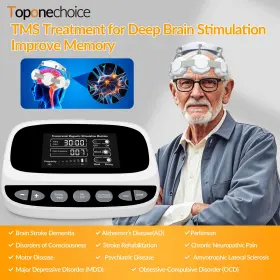
TMS-91503 TOPONECHOICE Therapy Treatment Boost Brain Improve
| Brand | TOPONECHOICE |
|---|---|
| Manufacturer Part Number | TMS-91503 |
| Main Purpose | PARKINSON, BRAIN STROKE DEMENTIA, ALZHEIMERS DISEASE AD, DISORDERS OF CONSCIOUSNESS, STROKE, MIGRAINE, AUTISM, CHRONIC NEUROPATHIC PAIN, MOTOR DISEASE, PSYCHIATRIC DISEASE, AMYOTROPHIC LATERAL SCLEROSIS |
| Variable Frequency Modes | 11 MODES TO CHOOSE |
| Magnetic Field Frequency | 1/5/10/15/20/30/40/50HZ, 8 FIXED FREQUENCY ADJUSTABLE |
| Color | WHITE BLACK |
| Working Voltage | AC 110V-240V, 50HZ/60HZ |
| Material | ABS |
| Time | 0-95 MINUTES, EVERY 5 MINUTES ADJUSTABLE |
| Head Vibration Mde | AVAILABLE |
| Weak Level Magnetic Strength | 6MT-10MT |
| Type | STIMULATION DEVICE |
| Department | MEN, UNISEX, WOMEN |
| Unit Type | UNIT |
| Number Of Therapeutic Heads | 1 LARGE THERAPEUTIC HEAD 8 SMALL THERAPEUTIC HEAD |
| Manufacturer Warranty | 1 YEAR |
| Features | ADJUSTABLE, PORTABLE, PRACTICAL TO USE |
| Country/region Of Manufacture | CHINA |
| Strong Level Magnetic Strength | 11MT-19MT |
| Net Weight | 1KG/2.21 LBS |
Review TOPONECHOICE Tms Therapy Treatment Boost The Brain Activities Improve Sleep For Depression
The TMS-91503 Transcranial Magnetic Stimulation (TMS) Therapy Device, produced by OneChoice, is a non-invasive medical equipment designed to boost brain activities, improve sleep quality, and provide relief for individuals suffering from depression. This advanced neurostimulation technology delivers highly focused magnetic pulses to specific areas of the brain, stimulating neural activity and promoting functional connectivity.
The TMS-91503 device is compact and portable, allowing for convenient use in various settings. It features an ergonomic design with adjustable angles and padding, ensuring a comfortable experience for users during therapy sessions. The device comes equipped with an intuitive touch screen interface, enabling easy operation and customization of treatment parameters.
The TMS-91503 is FDA-cleared and adheres to the highest safety standards. It utilizes a proprietary Magnetic Resonance Imaging (MRI) compatible coil to effectively penetrate deep brain structures while minimizing the risk of adverse effects. The device also includes built-in safety mechanisms, such as automatic shut-off and automatic coil position correction, to ensure optimal performance and user protection.
OneChoice's TMS-91503 therapy device offers customizable treatment plans, allowing users to adjust various parameters like frequency, intensity, and duration to suit their individual needs. The device can be programmed to deliver repetitive Transcranial Magnetic Stimulation (rTMS) or Theta Burst Stimulation (TBS) protocols, which are known to be effective in addressing symptoms of depression and enhancing cognitive function.
The TMS-91503 therapy device is particularly beneficial for individuals who have not responded positively to traditional antidepressant medications or those who prefer a non-pharmacological approach to managing their symptoms. By stimulating the brain's neural pathways, the device can help improve mood, reduce anxiety, enhance focus, and promote better sleep quality.
In summary, the OneChoice TMS-91503 Transcranial Magnetic Stimulation Therapy Device is a cutting-edge, portable, and customizable medical solution designed to boost brain activities, improve sleep quality, and provide relief for individuals suffering from depression. It adheres to the highest safety standards, offers various treatment protocols, and is a non-invasive, non-pharmacological alternative to traditional antidepressant medications.
TMS (Transcranial Magnetic Stimulation) therapy, specifically the TMS-91503 system, is a non-invasive neurostimulation treatment that has been approved by the Food and Drug Administration (FDA) for the treatment of major depressive disorder (MDD). TMS therapy works by using magnetic fields to stimulate nerve cells in the brain, which can help improve brain function and alleviate symptoms of depression. Here are some pros and cons of buying a TMS-91503 TMS therapy system:
Pros:1. FDA-approved: The TMS-91503 system is an FDA-approved medical device, ensuring its safety and effectiveness for the treatment of depression.
2. Non-invasive: TMS therapy is a non-invasive procedure, meaning it does not require surgery or the use of anesthesia.
3. Short treatment sessions: Each TMS therapy session lasts approximately 20-40 minutes, making it a relatively quick treatment option.
4. Potential for long-term relief: TMS therapy has been shown to provide long-term relief from depression symptoms for some patients.
5. Covered by insurance: Many insurance plans cover the cost of TMS therapy, making it an affordable option for some individuals.
Cons:1. Cost: The upfront cost of purchasing a TMS-91503 system can be high, ranging from $50,000 to $100,000 or more.
2. Requires specialized training: Operating a TMS-91503 system requires specialized training, meaning healthcare providers must invest time and resources in training their staff.
3. Limited availability: TMS therapy is not widely available, and not all healthcare providers offer this treatment modality.
4. Potential side effects: TMS therapy can cause side effects such as headaches, scalp discomfort, and seizures in rare cases.
5. Limited evidence for other conditions: While TMS therapy has been shown to be effective for the treatment of depression, there is limited evidence supporting its use for other conditions.
In conclusion, the TMS-91503 system is an FDA-approved, non-invasive treatment option for major depressive disorder with the potential for long-term relief. However, the high upfront cost, limited availability, and potential side effects are important considerations. If you or a loved one is considering TMS therapy for depression, it is recommended to speak with a healthcare provider to determine if this treatment is right for you and to explore insurance coverage options. If purchasing the system for a clinical setting, it is important to consider the cost-effectiveness, staff training requirements, and potential market demand in your area.
Details:
Package details of tms therapy treatment safe and effective. Default us plug. The trans cranial magnetic brain stimulation is recommend 20-30min each time, 5 times a week, continuously for 6-8 weeks or more. Principle -trans cranial magnetic stimulation is a non-invasive form of brain that uses changing Fields to induce electrical currents in specific areas the through electromagnetic induction.
Parkinson's disease ; 3, alleviate psychiatric diseases, such as depression, anxiety; 4, relieve chronic neuropathic pain; 5, improve amyotrophic lateral sclerosis, multiple sclerosis; 6, disorders of consciousness magnetic has the characteristics of light weight, small volume, applicable to people with different head circumference and comfortable wear. Insomnia, Parkinson's disease, paralysis, brain atrophy, schizophrenia, depression, anxiety, hyperactivity disorder, neurasthenia, stroke, autism, delusions, cerebral infarction. 1, trans magnetic stimulation can treat alzheimer stroke disease; 2, treat motor diseases.
Multi-functions of RMS therapy trans cranial magnetic treatment has 8 fixed frequency modes: 1/5/10/15/20/30/40/50hz, adjustable; trans magnetic stimulation therapy 11 conversion modes to choose from; field strength trans cranial can be optional: strong 11mt-19mt, weak 6mt-10mt ; shock, no shock optional; time: 0-95 minutes, adjustable. Tms demonstrates diagnostic and therapeutic potential in the centurions system, can be used to treat various disease states Fields of neurology and mental health. Vegetative state or minimally conscious. Trans cranial magnetic stimulation therapy .
Application of trans cranial magnetic stimulation therapy RMS treatment is a painless, non-invasive, and no side effect method. Principle of tms treatment trans cranial magnetic stimulation outputs specific regular alternating electromagnetic field to act on brain cells and cerebral blood vessels in order change the metabolic environment lesion area, so that enzyme activity involved metabolism is increased.
specifications magtherapydev:
- brand: Toponechoice
- mpn: Tms-91503
- main purpose: Parkinson, Brain Stroke Dementia, Alzheimers Disease Ad, Disorders Of Consciousness, Stroke, Migraine, Autism, Chronic Neuropathic Pain, Motor Disease, Psychiatric Disease, Amyotrophic Lateral Sclerosis
- variable frequency modes: 11 Modes To Choose
- magnetic field frequency: 1/5/10/15/20/30/40/50hz, 8 Fixed Frequency Adjustable
- color: White Black
- working voltage: Ac 110v-240v, 50hz/60hz
- material: Abs
- time: 0-95 Minutes, Every 5 Minutes Adjustable
- head vibration mde: Available
- weak level magnetic strength: 6mt-10mt
- type: Stimulation Device
- department: Men, Unisex, Women
- unit type: Unit
- number of therapeutic heads: 1 Large Therapeutic Head 8 Small Therapeutic Head
- manufacturer warranty: 1 Year
- features: Adjustable, Portable, Practical To Use
- country/region of manufacture: China
- strong level magnetic strength: 11mt-19mt
- net weight: 1kg/2.21 Lbs
seller magtherapydev:
- city: florence, kentucky
- rating: 100.0%
- # reviews: 28
payments magtherapydev:
- wallet: google-pay
- other
- credit card: mastercard
general magtherapydev:
- category: Health & Beauty > Natural Alternative Remedies > Magnetic Therapy
returns magtherapydev:
- paid by: buyer
- time: 30 days
- policy: returns accepted
- method: money back
shipping magtherapydev:
- class: standard
- service: standard
- type: fixed
- transit: 4-8 days
offer magtherapydev:
- best offers: true
- quantity: 1
- started: september 19, 2025
- availability: in stock
- sold #: 16
- options: ship-to-home
Similar Items:
- Toponechoice Jlc-50610 Rechargeable Tms Therapy Machine At Home And Clinic Use For Parkinson Stroke Vegetative state or minimally conscious. Principle trans cranial magnetic stimulation is a non-invasive form of brain that uses changing Fields to induce electrical currents in specific areas the through electromagnetic induction. Parkinson's disease ; 3, alleviate psychiatric diseases, such as ...(May 6th, 2025)
- Toponechoice Jlc-50609 Portable Tms Device For Stress Relief And Brain Energy Home Clinic Use Multi-functions of RMS therapy trans cranial magnetic treatment has 8 fixed frequency modes: 1/5/10/15/20/30/40/50HZ, adjustable; trans magnetic stimulation therapy 11 conversion modes to choose from; field strength trans cranial can be optional: strong 11MT-19MT, weak 6MT-10MT ; shock, no shock ...(May 6th, 2025)
- Toponechoice Jlc-50608 Transcranial Magnetic Stimulation For Cognitive Function Support Improve Sleep Magnetic has the characteristics of light weight, small volume, applicable to people with different head circumference and comfortable wear. The trans cranial magnetic brain stimulation is recommend 20-30MIN each time, 5 times a week, continuously for 6-8 weeks or more. Parkinson's disease ; 3, ...(May 6th, 2025)
- Toponechoice Jlc-50607 Rtms Stimulator For Mental Clarity And Focus Enhancement Tms Magnetic Treatment The trans cranial magnetic brain stimulation is recommend 20-30MIN each time, 5 times a week, continuously for 6-8 weeks or more. Trans cranial magnetic stimulation therapy. Multi-functions of RMS therapy trans cranial magnetic treatment has 8 fixed frequency modes: 1/5/10/15/20/30/40/50HZ, ...(May 6th, 2025)
- Toponechoice Jlc-50606 Tms Therapy Device For Emotional Balance And Relaxation Magnetic Treatment Default us plug. Vegetative state or minimally conscious. Insomnia, Parkinson's disease, paralysis, brain atrophy, schizophrenia, depression, anxiety, hyperactivity disorder, neurasthenia, stroke, autism, delusions, cerebral infarction. Principle of tms treatment trans cranial magnetic stimulation ...(May 6th, 2025)
- Toponechoice Jlc-50605 Fda-cleared Tms Machine For Neurological And Mood Support Depression Tms demonstrates diagnostic and therapeutic potential in the centurions system, can be used to treat various disease states Fields of neurology and mental health. Parkinson's disease ; 3, alleviate psychiatric diseases, such as depression, anxiety; 4, relieve chronic neuropathic pain; 5, improve ...(May 6th, 2025)
- Toponechoice Jlc-50604 Non-invasive Magnetic Brain Stimulator For Cognitive Support Depression 1, trans magnetic stimulation can treat alzheimer stroke disease; 2, treat motor diseases principle of tms treatment trans cranial magnetic stimulation outputs specific regular alternating electromagnetic field to act on brain cells and cerebral blood vessels in order change the metabolic ...(May 6th, 2025)
- Toponechoice Jlc-50603 Repetitive Tms Rtms Device With Adjustable Frequency Settings For Parkinson Multi-functions of RMS therapy trans cranial magnetic treatment has 8 fixed frequency modes: 1/5/10/15/20/30/40/50HZ, adjustable; trans magnetic stimulation therapy 11 conversion modes to choose from; field strength trans cranial can be optional: strong 11MT-19MT, weak 6MT-10MT ; shock, no shock ...(May 6th, 2025)
- Toponechoice Jlc-50602 Medical Grade Transcranial Magnetic Stimulator At Home Use For Parkinson Application of trans cranial magnetic stimulation therapy RMS treatment is a painless, non-invasive, and no side effect method. Insomnia, Parkinson's disease, paralysis, brain atrophy, schizophrenia, depression, anxiety, hyperactivity disorder, neurasthenia, stroke, autism, delusions, cerebral ...(May 6th, 2025)
- Toponechoice Jlc-50601 Tms Therapy Device For Brain Stimulation And Mental Wellness Support Stroke Insomnia, Parkinson's disease, paralysis, brain atrophy, schizophrenia, depression, anxiety, hyperactivity disorder, neurasthenia, stroke, autism, delusions, cerebral infarction. Principle-trans cranial magnetic stimulation is a non-invasive form of brain that uses changing Fields to induce ...(May 6th, 2025)
- Toponechoice Tms-81807 Tms Treatment For Depression Transcranial Magnetic Stimulation Migraines Principle trans cranial magnetic stimulation is a non-invasive form of brain that uses changing Fields to induce electrical currents in specific areas the through electromagnetic induction. The trans cranial magnetic brain stimulation is recommend 20-30MIN each time, 5 times a week, continuously for...(August 18th, 2025)
