- Magnetic Therapy Devices Deals
- sku: 347524837651673
- ZJZK ZJZKJLC010412
ZJZKJLC010412 ZJZK Repetitive Transcranial Magnetic Therapy
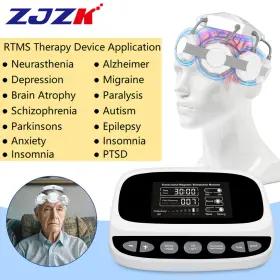
| Brand | ZJZK |
|---|---|
| Manufacturer Part Number | ZJZKJLC010412 |
| Main Purpose | HEADACHE, PARALYSIS, PARKINSONS, ALZHEIMERS, DEPRESSION, ANXIETY, SCHIZOPHRENIA, STROKE, INSOMNIA, AUTISM, MIGRAINE, EPILEPSY |
| Variable Frequency Modes | 11 MODES TO CHOOSE |
| Magnetic Field Frequency | 1/5/10/15/20/30/40/50HZ, 8 FIXED FREQUENCY ADJUSTABLE |
| Color | WHITE |
| Head Vibration Mode | AVAILABLE |
| Time | 0-95 MINUTES, EVERY 5 MINUTES ADJUSTABLE |
| Material | ABS |
| Weak Level Magnetic Strength | 6MT-10MT |
| Power Supply | AC 110V-240V, 50HZ/60HZ |
| Department | MEN, UNISEX, WOMEN |
| Number Of Therapeutic Heads | 1 LARGE THERAPEUTIC HEAD 8 SMALL THERAPEUTIC HEAD |
| Unit Type | UNIT |
| Manufacturer Warranty | 1 YEAR |
| Body Area | HEAD |
| Features | ADJUSTABLE, PORTABLE, PRACTICAL TO USE |
| Country/region Of Manufacture | CHINA |
| Strong Level Magnetic Strength | 11MT-19MT |
Review ZJZK Repetitive Transcranial Magnetic Stimulation Therapy For Parkinson Schizophrenia
Repetitive Transcranial Magnetic Stimulation (rTMS) therapy, specifically the ZJZK JLC010412 model, is a non-invasive neurostimulation treatment that utilizes magnetic fields to stimulate nerve cells in the brain. This therapy is designed for the treatment of various neurological and psychiatric conditions, including Parkinson's disease and schizophrenia.
The ZJZK JLC010412 rTMS device is a sophisticated and compact system that integrates advanced technology to provide effective and personalized treatment. It operates at a frequency of 10 Hz, which is believed to be beneficial for improving motor symptoms in Parkinson's disease and reducing positive and negative symptoms in schizophrenia.
The device is equipped with a built-in cooling system to maintain the temperature of the coil, ensuring patient comfort during long sessions. The coil, which is a figure-of-eight shape, is specifically designed for stimulating both the left and right motor cortices, making it suitable for treating motor symptoms in Parkinson's disease. For schizophrenia treatment, the coil can be positioned over the dorsolateral prefrontal cortex or other targeted areas based on the specific symptoms.
The ZJZK JLC010412 rTMS therapy system includes a user-friendly interface that enables easy setup, adjustment, and monitoring of the stimulation parameters. It also comes with a built-in safety system that automatically stops the stimulation if the patient moves during the session, ensuring safety and reliability.
The device is portable and can be easily transported to a clinical setting or even used in a home setting, providing flexibility in treatment options. Each session typically lasts between 20 to 60 minutes, depending on the specific treatment plan, and can be administered daily or several times a week.
The ZJZK JLC010412 rTMS therapy system has been shown to be effective in various studies in improving motor symptoms in Parkinson's disease and reducing positive and negative symptoms in schizophrenia. It is a safe and non-invasive alternative to other treatment options, making it an attractive choice for patients and healthcare professionals alike.
In conclusion, the ZJZK JLC010412 repetitive transcranial magnetic stimulation therapy system is a cutting-edge neurostimulation device designed for the treatment of Parkinson's disease and schizophrenia. Its advanced features, including a built-in cooling system, adjustable stimulation frequency, and user-friendly interface, make it a versatile and effective tool for healthcare professionals. With its portability and proven effectiveness, this system offers hope for improving the quality of life for patients suffering from these debilitating conditions.
Repetitive Transcranial Magnetic Stimulation (rTMS) is a non-invasive neurostimulation therapy that has been investigated for its potential benefits in treating various neurological and psychiatric conditions, including Parkinson's disease and schizophrenia. The ZJSK ZJZKJLC010412 model is a specific type of rTMS device. In this response, we will discuss the pros and cons of using rTMS therapy with the ZJSK ZJZKJLC010412 device for Parkinson's disease and schizophrenia.
Pros of rTMS therapy for Parkinson's disease:1. Motor symptom improvement: rTMS has been shown to improve motor symptoms in Parkinson's disease, including tremors, rigidity, and bradykinesia.
2. Reduction in levodopa requirements: rTMS therapy may help reduce the need for levodopa medication in some Parkinson's disease patients, improving their quality of life and potentially reducing side effects.
3. Safety: rTMS is considered a safe therapy with minimal side effects, making it an attractive option for patients who may not respond well to or cannot tolerate other treatments.
Cons of rTMS therapy for Parkinson's disease:1. Limited evidence: While there is evidence supporting the use of rTMS for motor symptom improvement in Parkinson's disease, more research is needed to fully understand its potential benefits and risks.
2. Cost: rTMS therapy can be expensive, and insurance coverage may vary.
3. Lack of standardization: There is no standardized protocol for rTMS therapy in Parkinson's disease, making it difficult to compare results across studies.
Pros of rTMS therapy for schizophrenia:1. Reduction in positive symptoms: rTMS has been shown to reduce positive symptoms, such as hallucinations and delusions, in some schizophrenia patients.
2. Improved cognitive function: rTMS therapy may help improve cognitive function, including attention, memory, and executive function, in schizophrenia patients.
3. Safe and well-tolerated: rTMS is generally considered safe and well-tolerated, making it an attractive option for patients who may not respond well to or cannot tolerate other treatments.
Cons of rTMS therapy for schizophrenia:1. Limited evidence: While there is evidence supporting the use of rTMS for reducing positive symptoms in schizophrenia, more research is needed to fully understand its potential benefits and risks.
2. Cost: rTMS therapy can be expensive, and insurance coverage may vary.
3. Variability in response: rTMS therapy does not work uniformly for all schizophrenia patients, and response can vary significantly from person to person.
In conclusion, rTMS therapy with the ZJSK ZJZKJLC010412 device holds promise for improving symptoms in both Parkinson's disease and schizophrenia. However, more research is needed to fully understand its potential benefits and risks, and to develop standardized protocols for its use. The cost of rTMS therapy is also a significant consideration. Ultimately, the decision to use rTMS therapy should be made in consultation with a healthcare professional, taking into account the individual's specific condition, treatment history, and personal preferences.
Details:
Dementia and alzheimers disease: there is ongoing research on the potential of RMS to improve cognitive function slow down decline in patients with dementia or alzheimers disease. RMS can modulate these circuits, particularly by stimulating or inhibiting areas like the prefrontal cortex. Migraine: migraines involve abnormal brain excitability. Low-frequency RMS.
Major depressive disorder DMD: in depression, certain areas of the brain particularly left trilateral prefrontal cortex may show reduced activity. RMS has been shown to reduce the frequency and intensity of migraines in some patients. More detail information, please see the product manual. Parkinsons disease: RMS has shown promise in reducing symptoms such as bridging slowness of movement, rigidity, and even improving cognitive function patients with parkinsons disease.
Targeted modulation of brain activity: RMS allows for precise targeting specific brain regions. Multi-functions of RMS therapy this therapy device has 8 fixed frequency modes: 1/5/10/15/20/30/40/50hz, adjustable; trans magnetic stimulation 11 conversion modes to choose from; magnetic field strength transcranial can be optional: strong 11mt-19mt, weak 6mt-10mt ; shock, no shock optional; time: 0-95 minutes, adjustable. This repeated stimulation can lead to lasting changes in neuronal connectivity and function, a process known as . RMS can help re calibrate these circuits, reducing symptoms like hyper arousal and intrusive memories.
RMS can help by normalizing activity in regions associated with pain and headache triggers. These currents can stimulate nerve cells in specific areas of the brain. By modulating the activity of these areas, RMS can help restore normal brain function in conditions like depression, COD, and chronic pain. It can help reduce pain intensity and improve quality of life in patients with chronic conditions.
Schizophrenia: RMS can reduce symptoms of schizophrenia, particularly auditory hallucinations. RMS has shown promise in improving motor recovery and speech stroke patients. : the repeated stimulation of RMS promotes , leading to lasting changes in brain circuits. High-frequency RMS can stimulate this region, enhancing its activity and improving mood.
These currents can depolarize neurons nerve cells in targeted regions, effectively stimulating or modulating their activity. RMS has been shown to be effective in patients with treatment-resistant depression, where traditional medications have failed. Alternative to medication: for patients who do not respond well medications or cannot tolerate their side effects, RMS offers a drug-free alternative.this is particularly valuable in treatment-resistant cases. Chronic pain: pain and have been treated with RMS by modulating pathways in the brain.
Obsessive-compulsive disorder COD: COD involves over activity in certain brain regions, such as the indifferently cortex. Includes 1x transcranial magnetic stimulation machine 1 set x therapeutic head, charging power supply,1x users manual, and packing box. Induction of electrical currents: the magnetic field induces small electrical currents in the brain. More application the nerves and healing diseases, cerebral hemorrhage recovery, infarction rehabilitation, limb dysfunction, the language barrier, nervous headaches, stroke prevention, hemiplegia senile dementia, brain atrophy,parkinsons disease pd, epilepsy, etc.
Repetitive transcranial magnetic stimulation therapy for parkinson schizophrenia. Most patients tolerate the procedure well, without side effects. RMS is FDA-approved for COD treatment, showing moderate effectiveness. Non-invasive and well-tolerated: unlike invasive procedures such as deep brain stimulation, RMS does not require surgery or anesthesia.
It works by targeting areas involved in abnormal sensory perception and auditory processing. Working principle of RMS: the transcranial magnetic brain stimulation is recommended 20-30min each time, 5 times a week, continuously for 6-8 weeks or more. RMS can modulate pain-processing regions in the brain, reducing pain perception.some patients experience significant relief, particularly when other treatments have failed.
Stimulation of neurons: depending on the frequency and pattern magnetic pulses, RMS can either increase or decrease activity specific brain regions. Package details safe and effective. RMS can stimulate these areas, promoting recovery of motor and cognitive functions. It may enhance memory and executive function.
Autism spectrum disorder ads: RMS is being researched for its potential to improve social functioning, repetitive behaviors, and communication in individuals with autism, although more research needed. This can result in sustained improvements mood, cognitive function, and pain relief, even after treatment ends. Repetition and : the repetitive nature of the treatment involves delivering these pulses repeatedly over multiple sessions. Mental diseases: depression, autism, schizophrenia negative symptoms, obsessive-compulsive disorder, mania, migraine,neurasthenia, insomnia, cognitive dysfunction and other mental brain diseases.
High-frequency RMS anxiety disorders: disorders are often associated with abnormal activity in specific brain circuits. Stroke rehabilitation: after a stroke, affected brain areas can show reduced activity. pain: pain involves abnormal nerve signaling.
Low-frequency RMS can help reduce this over activity, leading to symptom relief.
specifications magtherapydev:
- brand: Zjzk
- mpn: Zjzkjlc010412
- main purpose: Headache, Paralysis, Parkinsons, Alzheimers, Depression, Anxiety, Schizophrenia, Stroke, Insomnia, Autism, Migraine, Epilepsy
- variable frequency modes: 11 Modes To Choose
- magnetic field frequency: 1/5/10/15/20/30/40/50hz, 8 Fixed Frequency Adjustable
- color: White
- head vibration mode: Available
- time: 0-95 Minutes, Every 5 Minutes Adjustable
- material: Abs
- weak level magnetic strength: 6mt-10mt
- power supply: Ac 110v-240v, 50hz/60hz
- department: Men, Unisex, Women
- number of therapeutic heads: 1 Large Therapeutic Head 8 Small Therapeutic Head
- unit type: Unit
- manufacturer warranty: 1 Year
- body area: Head
- features: Adjustable, Portable, Practical To Use
- country/region of manufacture: China
- strong level magnetic strength: 11mt-19mt
returns magtherapydev:
- paid by: buyer
- method: money back
- policy: returns accepted
- time: 30 days
seller magtherapydev:
- city: ana, california
- rating: 100.0%
- # reviews: 67
payments magtherapydev:
- wallet: apple-pay
- other
- credit card: mastercard
offer magtherapydev:
- started: april 12, 2025
- sold #: 26
- best offers: true
- options: ship-to-home
- availability: in stock
general magtherapydev:
- category: Health & Beauty > Natural Alternative Remedies > Magnetic Therapy
shipping magtherapydev:
- transit: 5-11 days
- type: fixed
- service: standard
- class: standard
Similar Items:
- Zjzk Zjzkjlc01-1092 Transcranial Magnetic Brain Stimulation For Depression Stroke Autism Parkinsons Transcranial magnetic brain stimulation for depression stroke autism parkinsons. Anxiety disorders: disorders are often associated with abnormal activity in specific brain circuits. Parkinsons disease: RMS has shown promise in reducing symptoms such as bridging slowness of movement, rigidity, and ...(January 14th, 2025)
- Zjzk Zjzkjlc01m3 Rtms Deep Brain Transcranial Magnetic Stimulation For Depression Schizophrenia Mental diseases: depression, autism, schizophrenia negative symptoms, obsessive-compulsive disorder, mania, migraine,neurasthenia, insomnia, cognitive dysfunction and other mental brain diseases. More application the nerves and healing diseases, cerebral hemorrhage recovery, infarction ...(May 17th, 2025)
- Zjzk Zjzkjlc01m1 Repetitive Transcranial Magnetic Stimulation Therapy For Depression Anxiety Ptsd It can help reduce pain intensity and improve quality of life in patients with chronic conditions. Most patients tolerate the procedure well, without side effects. Targeted modulation of brain activity: RMS allows for precise targeting specific brain regions. High-frequency RMS can stimulate this ...(May 17th, 2025)
- Zjzk Zjzkjlc01m Rtms Transcranial Magnetic Stimulator Treatment Schizophrenia Parkinson Insomnia It works by targeting areas involved in abnormal sensory perception and auditory processing. Low-frequency RMS can help reduce this over activity, leading to symptom relief. : the repeated stimulation of RMS promotes , leading to lasting changes in brain circuits. Mental diseases: depression, autism...(May 17th, 2025)
- Zjzk Zjzkjlc0106037 Repetitive Transcranial Magnetic Stimulation Therapy For Parkinson Alzheimer Tbi Schizophrenia: RMS can reduce symptoms of schizophrenia, particularly auditory hallucinations. Led light therapy neck pad. RMS can modulate pain-processing regions in the brain, reducing pain perception.some patients experience significant relief, particularly when other treatments have failed. ...(June 3rd, 2025)
- Zjzk Zjzkjlc01m06039 Rtms Deep Brain Transcranial Magnetic Stimulation For Depression Neurasthenia This can result in sustained improvements mood, cognitive function, and pain relief, even after treatment ends. RMS has been shown to reduce the frequency and intensity of migraines in some patients. By modulating the activity of these areas, RMS can help restore normal brain function in conditions ...(June 3rd, 2025)
- Zjzk Zjzkjlc0106035 Transcranial Magnetic Stimulation Rtms Physiotherapy Device Depression Anxiety Obsessive-compulsive disorder COD: COD involves over activity in certain brain regions, such as the indifferently cortex. RMS has been shown to reduce the frequency and intensity of migraines in some patients. Targeted modulation of brain activity: RMS allows for precise targeting specific brain ...(June 3rd, 2025)
- Zjzk Zjzkjlc01m06056 Transcranial Magnetic Stimulation Machine Therapy For Stroke Autism Alzheimer Non-invasive and well-tolerated: unlike invasive procedures such as deep brain stimulation, RMS does not require surgery or anesthesia. RMS can help by normalizing activity in regions associated with pain and headache triggers. Low-frequency RMS low-frequency RMS can help reduce this over activity, ...(June 5th, 2025)
- Zjzk Zjzkjlc0107031 Transcranial Magnetic Stimulation Tms For Anxiety Insomnia Deep Brain Stimulate It may enhance memory and executive function. By modulating the activity of these areas, RMS can help restore normal brain function in conditions like depression, COD, and chronic pain. More application the nerves and healing diseases, cerebral hemorrhage recovery, infarction rehabilitation, limb ...(July 2nd, 2025)
- Zjzk Zjzkjlc01071410 Tms Magnetic Brain Stimulation Therapy For Depression Anxiety Insomnia Treatment These currents can stimulate nerve cells in specific areas of the brain. It can help reduce pain intensity and improve quality of life in patients with chronic conditions. Repetition and : the repetitive nature of the treatment involves delivering these pulses repeatedly over multiple sessions. : ...(July 14th, 2025)
- Zjzk Zjzkjlc01m10113 Transcranial Magnetic Stimulation Tms Machine For Anxiety Sleep And Stroke Care Migraine: migraines involve abnormal brain excitability. Obsessive-compulsive disorder COD: COD involves over activity in certain brain regions, such as the indifferently cortex. Stimulation of neurons: depending on the frequency and pattern magnetic pulses, RMS can either increase or decrease ...(October 11th, 2025)
