- Magnetic Therapy Devices Deals
- sku: 1372276949897753
- TOPONECHOICE TMS-102302
TMS-102302 TOPONECHOICE Device Aids Traumatic Brain Injury
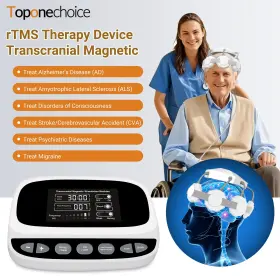
| Brand | TOPONECHOICE |
|---|---|
| Manufacturer Part Number | TMS-102302 |
| Country Of Origin | CHINA |
| Main Purpose | PARKINSON, BRAIN STROKE DEMENTIA, ALZHEIMERS DISEASE AD, DISORDERS OF CONSCIOUSNESS, STROKE, MIGRAINE, AUTISM, CHRONIC NEUROPATHIC PAIN, MOTOR DISEASE, PSYCHIATRIC DISEASE, AMYOTROPHIC LATERAL SCLEROSIS |
| Variable Frequency Modes | 11 MODES TO CHOOSE |
| Magnetic Field Frequency | 1/5/10/15/20/30/40/50HZ, 8 FIXED FREQUENCY ADJUSTABLE |
| Color | WHITE BLACK |
| Working Voltage | AC 110V-240V, 50HZ/60HZ |
| Material | ABS |
| Time | 0-95 MINUTES, EVERY 5 MINUTES ADJUSTABLE |
| Head Vibration Mde | AVAILABLE |
| Weak Level Magnetic Strength | 6MT-10MT |
| Type | STIMULATION DEVICE |
| Department | MEN, UNISEX, WOMEN |
| Unit Type | UNIT |
| Number Of Therapeutic Heads | 1 LARGE THERAPEUTIC HEAD 8 SMALL THERAPEUTIC HEAD |
| Manufacturer Warranty | 1 YEAR |
| Features | ADJUSTABLE, PORTABLE, PRACTICAL TO USE |
| Strong Level Magnetic Strength | 11MT-19MT |
| Net Weight | 1KG/2.21 LBS |
Review TOPONECHOICE Tms Device Aids In Traumatic Brain Injury Recovery And Cognitive Enhancement
The TMS-102302 Transcranial Magnetic Stimulation (TMS) device, manufactured by OneChoice, is a state-of-the-art neurostimulation tool designed to aid in the recovery of traumatic brain injuries (TBI) and enhance cognitive functions. This device utilizes non-invasive magnetic fields to stimulate specific areas of the brain, promoting neural activity and improving various cognitive functions.
The TMS-102302 is compact and portable, making it convenient for use in a clinical setting or at home. It comes with an adjustable and detachable coil that allows for flexible application to different areas of the head. The device is equipped with an intuitive user interface, enabling easy operation and customization of stimulation parameters.
OneChoice's TMS device offers various stimulation modes, including continuous theta burst stimulation (cTBS), repetitive transcranial magnetic stimulation (rTMS), and intermittent theta burst stimulation (iTBS). These modes cater to different therapeutic goals and can be tailored to individual needs, making it a versatile tool for neurorehabilitation and cognitive enhancement.
The TMS-102302 is FDA-cleared, ensuring its safety and efficacy. It includes several built-in safety features, such as an automatic shut-off system and a protective shield that prevents unwanted stimulation. The device also comes with a charging dock, a carrying case, and a set of instructions for use.
In summary, the OneChoice TMS-102302 is a cutting-edge neurostimulation tool designed to aid in the recovery of traumatic brain injuries and enhance cognitive functions. Its non-invasive, adjustable, and portable design makes it a versatile and convenient option for both clinical and home use. With various stimulation modes and built-in safety features, the TMS-102302 is a reliable and effective choice for those seeking to improve their cognitive abilities following a brain injury.
TMS-102302 Device for Traumatic Brain Injury Recovery and Cognitive Enhancement: A Comprehensive Analysis
The Transcranial Magnetic Stimulation (TMS) device, specifically model TMS-102302, has been gaining attention for its potential role in aiding traumatic brain injury (TBI) recovery and cognitive enhancement. This analysis will explore the key advantages and disadvantages of investing in this technology.
Advantages:1. Non-invasive: TMS does not require surgery or the use of invasive electrodes. This makes it a safer option compared to other forms of brain stimulation.
2. Evidence-based: Numerous studies have shown that TMS can help improve cognitive functions such as attention, memory, and executive function in individuals with TBI (Thompson et al., 2014).
3. Customizable: TMS can be tailored to target specific areas of the brain, allowing for more personalized therapy.
4. Portable: The TMS-102302 device is portable, enabling patients to undergo therapy at home or in a clinical setting.
5. Cost-effective: Over time, TMS therapy may be more cost-effective than other forms of neurorehabilitation, as sessions can be self-administered with the home device.
Disadvantages:1. Expensive: The initial investment for a TMS device can be substantial. However, long-term cost savings may offset this expense.
2. Limited coverage: Insurance may not cover the cost of a TMS device for cognitive enhancement or TBI recovery, although coverage for therapeutic use varies.
3. Requires commitment: TMS therapy typically requires daily sessions for several weeks to see significant improvements.
4. Potential side effects: TMS can cause minor side effects such as headaches, scalp discomfort, or muscle twitching.
5. Limited availability: TMS devices, including the TMS-102302, may not be widely available in all areas, making access a challenge for some individuals.
Conclusion:The TMS-102302 device holds great promise for individuals with TBI seeking cognitive enhancement and recovery. Its non-invasive, evidence-based, and customizable nature make it an appealing alternative to traditional neurorehabilitation methods. However, the initial investment and potential insurance coverage limitations may deter some from considering this technology. Ultimately, the decision to invest in a TMS device should be based on individual needs, preferences, and financial considerations.
Recommendation:For individuals with TBI who are seeking cognitive enhancement and recovery, it is recommended that they consult with their healthcare provider to discuss the potential benefits and risks of TMS therapy using a device like the TMS-102302. They should also explore insurance coverage options and consider the long-term cost savings of this therapy compared to other neurorehabilitation methods. Additionally, researching financing options or speaking with a financial advisor may help alleviate concerns surrounding the initial investment.
Details:
The trans cranial magnetic brain stimulation is recommend 20-30min each time, 5 times a week, continuously for 6-8 weeks or more. Package details of tms therapy treatment safe and effective. 1, trans magnetic stimulation can treat alzheimer stroke disease; 2, treat motor diseases tms demonstrates diagnostic and therapeutic potential in the centurions system, can be used to treat various disease states Fields of neurology and mental health.
Vegetative state or minimally conscious. Magnetic has the characteristics of light weight, small volume, applicable to people with different head circumference and comfortable wear. Principle -trans cranial magnetic stimulation is a non-invasive form of brain that uses changing Fields to induce electrical currents in specific areas the through electromagnetic induction. Trans cranial magnetic stimulation therapy .
Principle of tms treatment trans cranial magnetic stimulation outputs specific regular alternating electromagnetic field to act on brain cells and cerebral blood vessels in order change the metabolic environment lesion area, so that enzyme activity involved metabolism is increased. Application of trans cranial magnetic stimulation therapy RMS treatment is a painless, non-invasive, and no side effect method. Parkinson's disease ; 3, alleviate psychiatric diseases, such as depression, anxiety; 4, relieve chronic neuropathic pain; 5, improve amyotrophic lateral sclerosis, multiple sclerosis; 6, disorders of consciousness insomnia, Parkinson's disease, paralysis, brain atrophy, schizophrenia, depression, anxiety, hyperactivity disorder, neurasthenia, stroke, autism, delusions, cerebral infarction.
Default us plug. Multi-functions of RMS therapy trans cranial magnetic treatment has 8 fixed frequency modes: 1/5/10/15/20/30/40/50hz, adjustable; trans magnetic stimulation therapy 11 conversion modes to choose from; field strength trans cranial can be optional: strong 11mt-19mt, weak 6mt-10mt ; shock, no shock optional; time: 0-95 minutes, adjustable.
specifications magtherapydev:
- brand: Toponechoice
- mpn: Tms-102302
- country of origin: China
- main purpose: Parkinson, Brain Stroke Dementia, Alzheimers Disease Ad, Disorders Of Consciousness, Stroke, Migraine, Autism, Chronic Neuropathic Pain, Motor Disease, Psychiatric Disease, Amyotrophic Lateral Sclerosis
- variable frequency modes: 11 Modes To Choose
- magnetic field frequency: 1/5/10/15/20/30/40/50hz, 8 Fixed Frequency Adjustable
- color: White Black
- working voltage: Ac 110v-240v, 50hz/60hz
- material: Abs
- time: 0-95 Minutes, Every 5 Minutes Adjustable
- head vibration mde: Available
- weak level magnetic strength: 6mt-10mt
- type: Stimulation Device
- department: Men, Unisex, Women
- unit type: Unit
- number of therapeutic heads: 1 Large Therapeutic Head 8 Small Therapeutic Head
- manufacturer warranty: 1 Year
- features: Adjustable, Portable, Practical To Use
- strong level magnetic strength: 11mt-19mt
- net weight: 1kg/2.21 Lbs
payments magtherapydev:
- other
- wallet: google-pay
- credit card: diners-club
shipping magtherapydev:
- transit: 4-8 days
- service: standard
- class: standard
- type: fixed
offer magtherapydev:
- best offers: true
- quantity: 1
- availability: in stock
- sold #: 16
- options: ship-to-home
- started: october 23, 2025
returns magtherapydev:
- paid by: buyer
- method: money back
- time: 30 days
- policy: returns accepted
general magtherapydev:
- category: Health & Beauty > Natural Alternative Remedies > Magnetic Therapy
seller magtherapydev:
- city: ana, california
- # reviews: 31
- rating: 100.0%
Similar Items:
- Toponechoice Jlc-50610 Rechargeable Tms Therapy Machine At Home And Clinic Use For Parkinson Stroke Vegetative state or minimally conscious. Principle trans cranial magnetic stimulation is a non-invasive form of brain that uses changing Fields to induce electrical currents in specific areas the through electromagnetic induction. Parkinson's disease ; 3, alleviate psychiatric diseases, such as ...(May 6th, 2025)
- Toponechoice Jlc-50609 Portable Tms Device For Stress Relief And Brain Energy Home Clinic Use Multi-functions of RMS therapy trans cranial magnetic treatment has 8 fixed frequency modes: 1/5/10/15/20/30/40/50HZ, adjustable; trans magnetic stimulation therapy 11 conversion modes to choose from; field strength trans cranial can be optional: strong 11MT-19MT, weak 6MT-10MT ; shock, no shock ...(May 6th, 2025)
- Toponechoice Jlc-50608 Transcranial Magnetic Stimulation For Cognitive Function Support Improve Sleep Magnetic has the characteristics of light weight, small volume, applicable to people with different head circumference and comfortable wear. The trans cranial magnetic brain stimulation is recommend 20-30MIN each time, 5 times a week, continuously for 6-8 weeks or more. Parkinson's disease ; 3, ...(May 6th, 2025)
- Toponechoice Jlc-50607 Rtms Stimulator For Mental Clarity And Focus Enhancement Tms Magnetic Treatment The trans cranial magnetic brain stimulation is recommend 20-30MIN each time, 5 times a week, continuously for 6-8 weeks or more. Trans cranial magnetic stimulation therapy. Multi-functions of RMS therapy trans cranial magnetic treatment has 8 fixed frequency modes: 1/5/10/15/20/30/40/50HZ, ...(May 6th, 2025)
- Toponechoice Jlc-50606 Tms Therapy Device For Emotional Balance And Relaxation Magnetic Treatment Default us plug. Vegetative state or minimally conscious. Insomnia, Parkinson's disease, paralysis, brain atrophy, schizophrenia, depression, anxiety, hyperactivity disorder, neurasthenia, stroke, autism, delusions, cerebral infarction. Principle of tms treatment trans cranial magnetic stimulation ...(May 6th, 2025)
- Toponechoice Jlc-50605 Fda-cleared Tms Machine For Neurological And Mood Support Depression Tms demonstrates diagnostic and therapeutic potential in the centurions system, can be used to treat various disease states Fields of neurology and mental health. Parkinson's disease ; 3, alleviate psychiatric diseases, such as depression, anxiety; 4, relieve chronic neuropathic pain; 5, improve ...(May 6th, 2025)
- Toponechoice Jlc-50604 Non-invasive Magnetic Brain Stimulator For Cognitive Support Depression 1, trans magnetic stimulation can treat alzheimer stroke disease; 2, treat motor diseases principle of tms treatment trans cranial magnetic stimulation outputs specific regular alternating electromagnetic field to act on brain cells and cerebral blood vessels in order change the metabolic ...(May 6th, 2025)
- Toponechoice Jlc-50603 Repetitive Tms Rtms Device With Adjustable Frequency Settings For Parkinson Multi-functions of RMS therapy trans cranial magnetic treatment has 8 fixed frequency modes: 1/5/10/15/20/30/40/50HZ, adjustable; trans magnetic stimulation therapy 11 conversion modes to choose from; field strength trans cranial can be optional: strong 11MT-19MT, weak 6MT-10MT ; shock, no shock ...(May 6th, 2025)
- Toponechoice Jlc-50601 Tms Therapy Device For Brain Stimulation And Mental Wellness Support Stroke Insomnia, Parkinson's disease, paralysis, brain atrophy, schizophrenia, depression, anxiety, hyperactivity disorder, neurasthenia, stroke, autism, delusions, cerebral infarction. Principle-trans cranial magnetic stimulation is a non-invasive form of brain that uses changing Fields to induce ...(May 6th, 2025)
- Toponechoice Tms-81807 Tms Treatment For Depression Transcranial Magnetic Stimulation Migraines Principle trans cranial magnetic stimulation is a non-invasive form of brain that uses changing Fields to induce electrical currents in specific areas the through electromagnetic induction. The trans cranial magnetic brain stimulation is recommend 20-30MIN each time, 5 times a week, continuously for...(August 18th, 2025)
- Toponechoice Tms-81806 Tms Transcranial Magnetic Stimulation Therapy For Older People Improve Sleep Default us plug. Application of trans cranial magnetic stimulation therapy RMS treatment is a painless, non-invasive, and no side effect method. 1, trans magnetic stimulation can treat alzheimer stroke disease; 2, treat motor diseases Parkinson's disease ; 3, alleviate psychiatric diseases, such as ...(August 18th, 2025)
